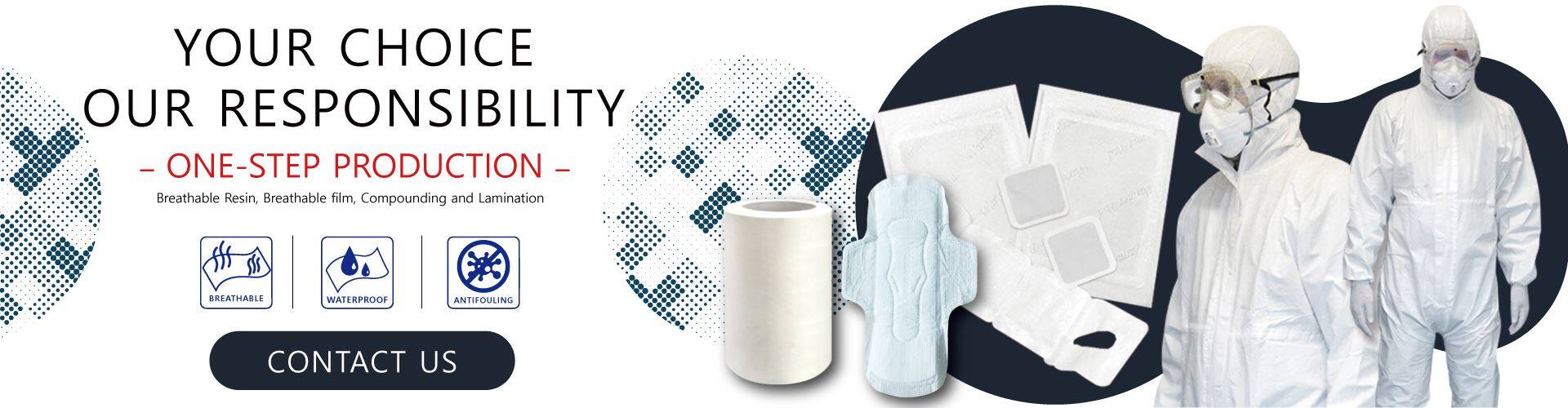
Lamination Fabric
White, Green, Blue, Yellow, Orange. Desire color and printing design are also acceptable by demand.
Why Choose Us
Competitive Price
We have a professional purchasing team and costing team, trying to reduce costs and profits, and provide you with a good price.
Production Equipment
We have devoted amount of resource for maintain and keep our equipment in the best state for our customers.
Professional Team
Our self-developed additives based on our professional chemical knowledge, such as wet indicator ink, coating glue, antistatic additives, etc., can provide professional advice to customers facing chemical problems.
Product Tracking System
With a complete tracking system, once the batch number is obtained, the entire production process and raw materials can be tracking.
What is Laminated Fabric
Laminated fabric refers to a material composed of multiple layers bonded together to create a single integrated sheet. Typically, a laminated fabric consists of a base fabric layer, such as nonwoven, cotton, polyester, or nylon, which is then coated or bonded with one or more additional layers like breathable film for specific functional or various industrial purposes.
-
![Microporous Medical Fabric]()
Microporous Medical Fabric
-
![Microporous Industrial Fabric]()
Microporous Industrial Fabric
-
![Microporous Hygiene Fabric]()
Microporous Hygiene Fabric
-
![Breathable Construction Fabric]()
Breathable Construction Fabric
-
![Agricultural Fabric]()
Agricultural Fabric
-
![Car Cover Fabric]()
Car Cover Fabric
-
![Desiccant Dehumidifier Fabric]()
Desiccant Dehumidifier Fabric
-
![Recycle Functional Clothing Fabric]()
Recycle Functional Clothing Fabric
-
![Functional Clothing Fabric]()
Functional Clothing Fabric
-
![Underpad Backsheets Fabric]()
Underpad Backsheets Fabric
-
![Medical Reinforced Fabric]()
Medical Reinforced Fabric
-
![Medical Surgical Gown Fabric]()
Medical Surgical Gown Fabric


Benefits of Laminated Fabric
Enhanced Strength and Durability
Non-woven fabric serves as a robust base layer, providing structural integrity and durability to the laminate. The lamination process reinforces the non-woven fabric, preventing tearing and improving overall strength.
Waterproof and Breathable Properties
The breathable membrane enhances comfort by allowing moisture vapor to escape, while blocking water ingress, keeping the wearer dry and comfortable. Non-woven fabric acts as a protective barrier, preventing liquid penetration and enhancing the waterproofing capabilities of the laminate.
Improved Comfort and Air Permeability
The breathable membrane promotes air circulation, reducing heat buildup and maintaining a comfortable microclimate. Non-woven fabric contributes to air permeability, enhancing breathability and preventing moisture buildup for prolonged comfort during wear.
Versatile Applications
The combination of non-woven fabric and breathable membrane creates a versatile material suitable for various applications such as outdoor apparel, medical garments, and protective gear. The laminate's versatility allows it to adapt to different environmental conditions while providing reliable protection and comfort.
What are the Applications of Laminated Fabric
Packaging
Microporous film is widely used in the packaging industry for wrapping food items, consumer goods, and industrial products.
Agriculture
In agriculture, Microporous film is employed as mulch film and greenhouse covers to improve crop yield and protect plants.
Industrial protective
It can use in industrial protective clothing fabric such as chemicals, pharmaceuticals, biotechnology, cleaning, and sanitation.
Medical
Microporous film is used in the healthcare sector for medical packaging and disposable medical equipment.
Types of Laminated Fabric
Hot melt lamination is a common method of bonding non-woven fabric with breathable film. In this process, the breathable film is placed on the surface of the non-woven fabric and then bonded together using heat and pressure. Through the application of heat, the breathable film and non-woven fabric are tightly fused, forming a strong composite structure. This method does not require the use of additional adhesives or glues, thereby reducing costs and improving production efficiency. Additionally, hot melt lamination ensures that the bonded materials have good breathability and waterproof properties.
Adhesive bonding is another common method of bonding non-woven fabric with breathable film. In this process, a special adhesive or glue is applied to the surfaces of the non-woven fabric and breathable film, and then they are bonded together through heating or pressure. This method ensures a strong bond between the non-woven fabric and breathable film while providing good waterproofing and breathability. However, using adhesive bonding may increase production costs, and careful control of the amount of adhesive used is required to avoid affecting the performance and quality of the final product.
Heat Bonding
Heat bonding is a method of bonding non-woven fabric and breathable film together using heat energy. In this process, the non-woven fabric and breathable film are placed together, and then heat and pressure are applied to create a bond at the contact points. This method does not require the use of additional adhesives or glues, thereby reducing reliance on chemicals, lowering costs, and improving production efficiency. Heat bonding ensures a strong bond between the non-woven fabric and breathable film and typically results in lower product waste and pollution.
Properties of Laminated Fabric
Breathability
When non-woven fabric is laminated with a breathable membrane, the resulting composite material maintains the ability to allow air and moisture vapor to pass through while providing a barrier against liquid water. This ensures comfort for the wearer in applications such as outdoor apparel or medical garments.
Waterproof
The lamination of non-woven fabric with a breathable membrane enhances its waterproof properties. The membrane acts as a barrier against liquid water penetration while still permitting the passage of moisture vapor, keeping the wearer dry and comfortable in wet conditions.
Flexibility
The combination of non-woven fabric and a breathable membrane in lamination provides flexibility to the material. This allows for ease of movement and comfortable wearability in applications such as clothing, where freedom of movement is essential.
Durability
Laminating non-woven fabric with a breathable membrane improves the durability of the resulting composite material. The membrane adds strength and resistance to tearing and puncturing, enhancing the longevity of products like outdoor gear, medical drapes, or protective covers.
Moisture Management
Laminated non-woven fabric with a breathable membrane offers effective moisture management properties. It allows sweat and moisture vapor to escape from the fabric's interior while preventing the ingress of external moisture, thus maintaining a dry and comfortable microclimate for the wearer.
Process of Laminated Fabric

Preparation
Before starting the lamination process of non-woven fabric and breathable film, it is important to ensure that the work area is clean and tidy to prevent dust or other contaminants from affecting the lamination quality. Additionally, prepare all necessary materials including the non-woven fabric, breathable film, and adhesive such as glue or hot melt adhesive.

Surface Treatment
During the lamination process, it is crucial to ensure that the surfaces of the non-woven fabric and breathable film are clean and have good adhesion. This can be achieved by cleaning and removing surface dirt. In some cases, special surface treatment agents may be required to enhance adhesion, such as surface activators or ion beam treatments.
Heat Press Lamination
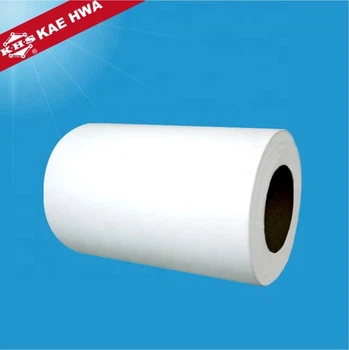
Heat press lamination is a common method for tightly bonding non-woven fabric and breathable film together. In this step, the non-woven fabric and breathable film are placed in a press machine, and appropriate pressure and temperature are applied. The press machine heats both materials to a certain temperature, causing them to fuse together. This method is typically used in lamination processes involving hot melt adhesives.

Inspection and Post-processing
After heat press lamination is completed, inspect the laminated product to ensure there are no air bubbles or other defects. Any issues should be promptly repaired or re-laminated. After completing all lamination work, post-processing may be carried out as needed, such as cutting the laminated material to the desired size or performing other finishing processes.
Advantages of Using Laminated Fabric
Enhanced Durability
Laminating non-woven fabric with a breathable membrane enhances its durability. The non-woven fabric provides strength and stability, while the breathable membrane adds an extra layer of protection against moisture, abrasion, and tearing. This results in a composite material that is more resistant to wear and tear, extending the lifespan of the final product.
Improved Waterproofing
The combination of non-woven fabric and a breathable membrane enhances waterproofing properties. The non-woven fabric acts as a barrier to water penetration, while the breathable membrane allows moisture vapor to escape, preventing the buildup of condensation inside the material. This results in a waterproof fabric that remains breathable, keeping the wearer dry and comfortable in wet conditions.
Breathability
Laminating non-woven fabric with a breathable membrane maintains the fabric's breathability while adding water resistance. The breathable membrane allows moisture vapor to escape from the fabric, preventing the buildup of sweat and heat, which can cause discomfort during physical activity. This ensures that the final product remains breathable and comfortable to wear for extended periods.
Enhanced Comfort
The combination of non-woven fabric and a breathable membrane enhances comfort levels. The non-woven fabric provides a soft and comfortable feel against the skin, while the breathable membrane allows moisture vapor to escape, preventing the fabric from becoming clammy and uncomfortable. This results in a final product that is both durable and comfortable to wear in various conditions.
Cheap price
The processing and production of high-density polyethylene is fast and cheap. Matte plastic for consumer products such as shampoo bottles, body lotions, detergents and HDPE plastic pots.
Versatility
Laminated non-woven fabric with a breathable membrane offers versatility in applications. The combination of waterproofing, breathability, and durability makes it suitable for a wide range of products, including outdoor apparel, tents, bags, and medical textiles. This versatility allows manufacturers to create high-performance products that meet the specific needs of their customers.
Our Factory
Since 1998, Kae Hwa Industries has concentrated and dedicated research and developing the Breathable Resin, Breathable film, Compounding and Lamination for diversity application. With the strong chemical background and understand to the market trend, our company keep investing on new facility and upgrade existing equipment to meet market demand.Today, the significant products has developed for different category by Kae Hwa Taiwan, Malaysia and China facility, such as backsheet for Diapers and Incontinent, Apron, Industrial Coveralls, Outdoor cover, Agriculture cover, Convenient Raincoat, the cover for desiccant, warm pack and etc.

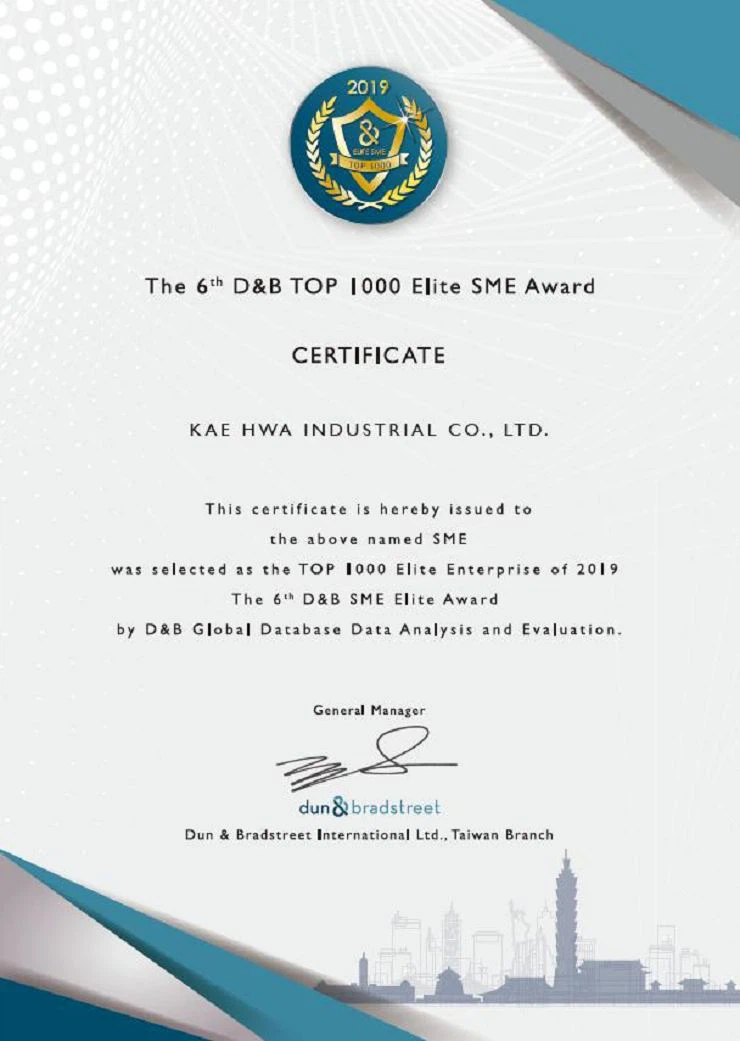
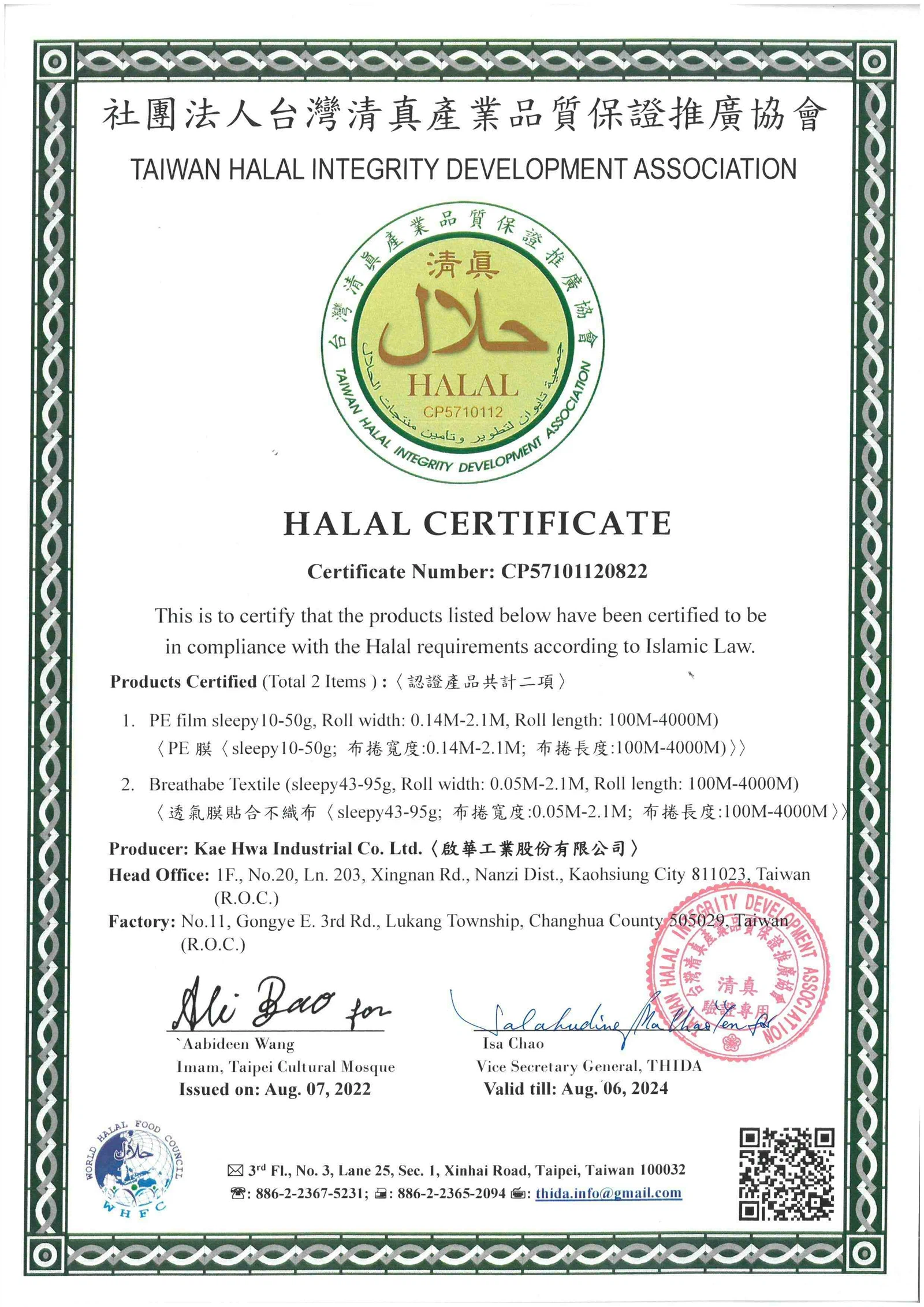
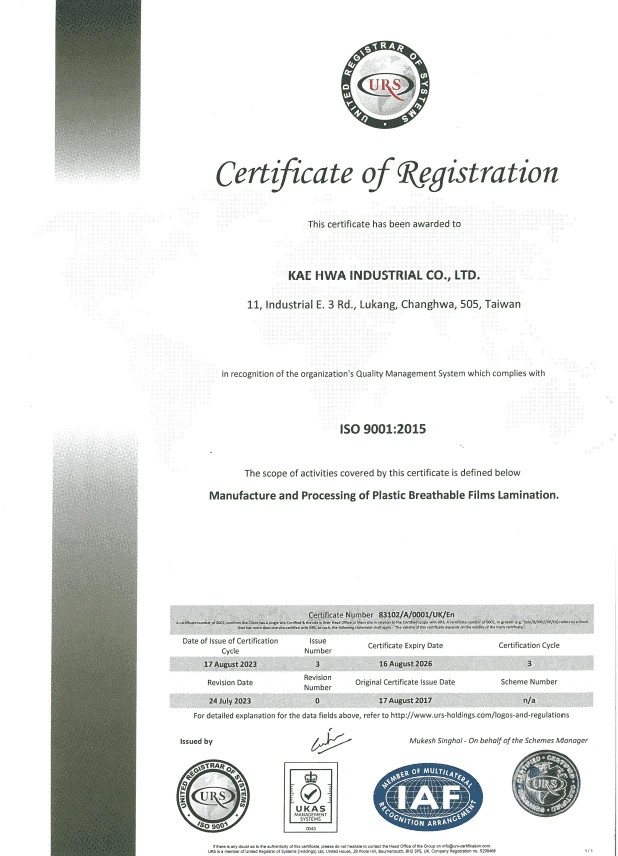
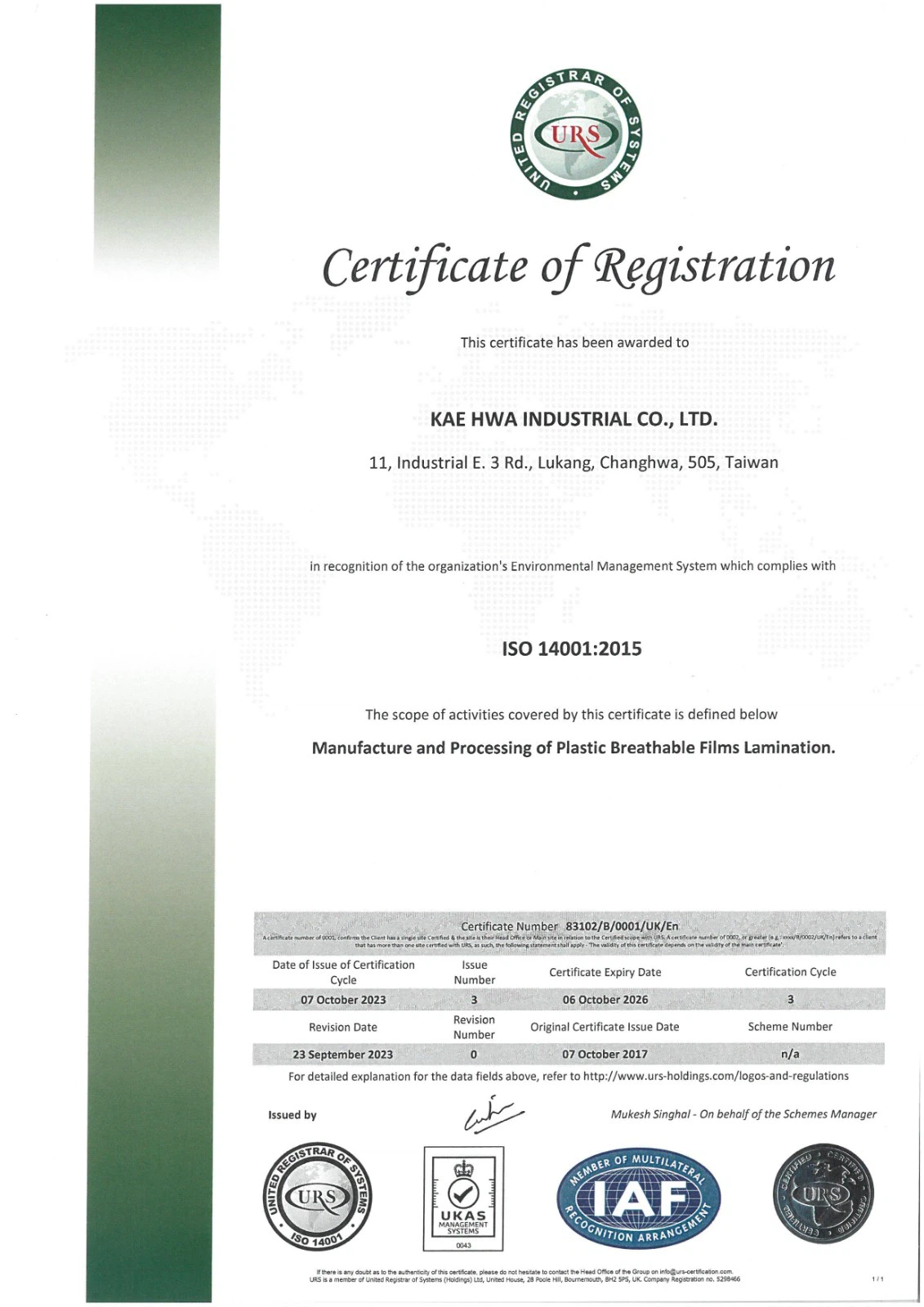
Our Certificate